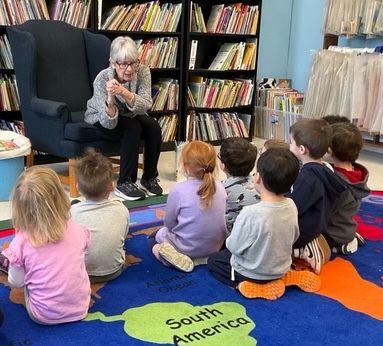
Ask Daryl, the Volunteer Librarian at Family ACCESS, to tell you a story, and you will get as many as you could possibly want.
“We have so many wonderful children’s books. It’s unique for an Early Learning Center like this to have such a large library,” she notes.
During National Reading Month, we asked Daryl, who served for 24 years as the coordinator of children’s books for the Cambridge Public Library, about the importance of reading to your kids at home. She pointed to numerous studies that show reading is essential for preschoolers. Those include a 2019 study at Ohio State University that found young children whose parents read them five books a day enter kindergarten having heard 1.4 million more words than those who were never read to. Also, a 20-year research project at the University of Nevada found that having books in the home (as few as 20 age-appropriate books) increased the level of education a child in that home reached.
“It’s vital. It really makes a difference in how they do in school,” says Daryl. She offers these tips to help engage your toddler or preschooler in reading.
Have a Routine: For some families, it’s a story before bedtime. For others, it might be when dinner is cooking. Make reading a scheduled part of the day.
Have Books at the Ready: It’s important, Daryl says, to have age-appropriate books around the house, at their level, so your child can pick them up on their own. They may look through it themselves or ask for a family member to read it to them.
Help Them Participate: Even if you do all the reading, children love to take part. They often will want to turn the pages themselves or point out an illustration that excites them.
“Reading together can add a lot to your relationship with your child because you are sharing the experience of that story with them,” explains Daryl. “From that point on, if you see something that reminds you of the book, you’ll both be able to say, ‘that’s just like in the story!’”